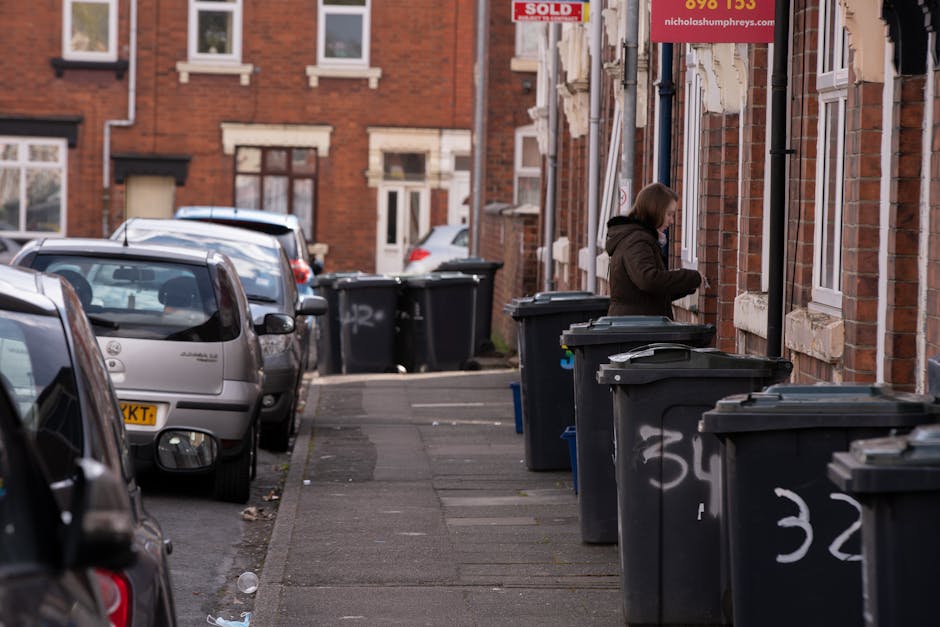
Avoid delays when narrow access blocks Croydon rubbish collection
When a driveway is tight, a passage is awkward, or the only route to the waste is a narrow side gate, rubbish removal can slow down fast. If you are trying to avoid delays when narrow access blocks Croydon rubbish collection, the real challenge is rarely the waste itself. It is the access. One missed measurement, one blocked hallway, or one parked car in the wrong place, and a simple job can turn into a longer, messier visit than anyone wanted.
That is frustrating, especially if you are clearing a flat, a house after tenants have moved out, a garage full of old bits, or builders' waste after a refurb. The good news is that most access delays are preventable. With the right prep, a clear plan, and a few practical checks, you can keep the collection moving, reduce labour time, and make the whole thing feel much less stressful. Let's face it, nobody wants a waste load hanging around for another week because a trolley could not fit through a doorway.
This guide breaks down what narrow access really means, why it causes delays, how to prepare your property in Croydon, and what to do if access is awkward but not impossible. You will also find a checklist, a comparison table, and a realistic example from an everyday clearance situation.
Table of Contents
- Why narrow access matters
- How collection works when access is tight
- Key benefits of planning ahead
- Who this is for
- Step-by-step guidance
- Expert tips for smoother collection
- Common mistakes to avoid
- Tools, resources and recommendations
- Law, compliance and best practice
- Options and comparison
- Real-world example
- Practical checklist
- Conclusion
- Frequently asked questions
Why narrow access matters
Narrow access changes the pace of a rubbish collection because it limits how quickly items can be moved, loaded, and carried safely. A clear driveway lets a team work in a straight line. A cramped terrace, basement, upper-floor flat, or awkward courtyard usually means slower lifting, more trips, more handling, and a higher chance that something gets stuck. That might sound obvious, but in practice the impact is bigger than people expect.
In Croydon, this comes up often with converted properties, terraced streets, older housing stock, and flats with shared entryways. A sofa may fit through the front room, then stall on a corner. A fridge may clear the doorway but not the stair turn. A builder's bag may be easy to carry from the garden, unless the side return is only just wide enough for one person at a time. Small details, big difference.
Delays matter because they affect cost, scheduling, and sometimes safety. If a collection crew has to spend extra time carrying items by hand, breaking down bulky waste, or waiting for access to be cleared, the visit can stretch longer than expected. That can disrupt the rest of the day for both the team and the customer. It also increases the chance of damage to walls, banisters, floors, or the items themselves.
There is another angle too: blocked access can make a job look simple on paper but tricky in reality. That mismatch is where misunderstandings happen. A customer may expect a quick uplift; the crew arrives and finds a narrow path, a low arch, bins in the way, and several heavy items in the rear garden. Suddenly the plan needs adjusting on the spot. Nobody enjoys that moment, to be fair.
If you are arranging a larger clearance, it can help to review the relevant service page first, such as house clearance, flat clearance, or office clearance, so you can match the job to the right type of removal.
How narrow access blocks Croydon rubbish collection works
A good rubbish collection starts with a route. The team needs a path from the waste to the vehicle, and that path has to work for real people carrying awkward loads. When the route is narrow, the collection usually changes in one or more of these ways:
- items are carried in smaller loads
- bulky pieces are dismantled before removal
- a trolley or sack barrow may not be usable for every item
- more care is needed around walls, stairs, and door frames
- the loading process takes longer than a standard clearance
It is not just about width. Height, turns, steps, surface grip, lighting, and parking all matter. A hallway that looks manageable can become a pain if there is a tight bend halfway down. A garden gate can look "fine" until you try to pass a wardrobe through it. A long carry from the collection point to the roadside can also slow things down, especially if the route crosses gravel, wet paving, or a shared entrance.
In many cases, crews will ask for photos or a brief description before the visit. That is not fussiness; it is how they decide whether they need extra labour, extra time, or a different plan. If the waste is in a loft, garage, or rear garden, it may be worth checking associated pages such as loft clearance or garage clearance if those spaces are part of the job.
Sometimes the solution is simple: move parked cars, unlock side gates, clear bins, and stack items near the most accessible point. Other times, the job needs staging. That means preparing the waste in a sequence so the team can move it out piece by piece without repeatedly turning around in a cramped area. It sounds small. It really isn't. The difference can be the difference between a neat, efficient collection and a job that drags on and on.
Key benefits of planning ahead
Planning for narrow access is not just about avoiding headaches. It has practical upsides that show up on the day and sometimes in the price too.
- Less waiting around: when the route is clear, the team can get on with the job instead of rearranging the space first.
- Lower risk of damage: fewer tight turns and fewer rushed carries usually mean fewer scuffs, knocks, and frustrations.
- More accurate quotes: good access details help the provider estimate labour and time more realistically.
- Smoother same-day collection: a prepared property gives the crew a better chance of finishing in one visit.
- Better safety: the less cluttered the route, the less likely someone is to trip, twist, or drop something awkward.
There is also a quieter benefit: the whole experience feels calmer. If you know the side passage is clear, the keys are ready, and the bulky items are grouped by exit point, you do not spend half the appointment wondering whether the team will even get through. That peace of mind is worth quite a lot, especially during a home move or renovation when everything else is already noisy and a bit chaotic.
For certain jobs, a well-prepared access route can also make related services more efficient. For example, furniture clearance and furniture disposal tend to go much faster when bulky pieces are grouped near the front door and any screws or detachable parts are removed in advance.
Who this is for and when it makes sense
This advice is useful for a lot of people, not just those with tiny hallways. Narrow access issues come up in plenty of everyday Croydon scenarios:
- tenants clearing a flat before moving out
- landlords arranging a turnaround between lets
- families emptying a house after years of accumulation
- builders and tradespeople managing leftover rubble or packaging
- shop owners and office managers clearing stock or old equipment
- homeowners dealing with a side return, basement, or rear garden route
It also makes sense if you are in a property with shared access, such as a converted building or a block with a narrow communal entrance. In those settings, the issue is not only the width of the route. It is also about timing, courtesy, and making sure neighbours are not blocked unnecessarily.
If the job is commercial, it may be wise to look at business waste removal or builders waste clearance as those services are often better suited to larger volumes and more awkward site conditions. Office environments, especially, can hide access issues behind lift timings, loading restrictions, and shared corridors that are always a bit tighter than expected.
Truth be told, even people who are usually very organised can miss the access detail. They remember the items. They forget the gate latch, the narrow stair turn, or the old chest of drawers that has to move before anything else can. Happens all the time.
Step-by-step guidance
If you want to avoid delays when narrow access blocks Croydon rubbish collection, this is the most practical place to start. Work through the steps in order. Not every job needs all of them, but most awkward-access collections benefit from at least a few.
1. Measure the tight points
Check doorways, gates, stair turns, corridor widths, and any low ceilings or overhanging fixtures. You do not need a builder's laser setup. A tape measure and a few photos are often enough. Focus on the smallest points, because those are the ones that usually stop the job.
2. Clear the access route completely
Move shoes, bikes, prams, bins, plant pots, and loose items out of the way. If the route passes through a hallway, make sure there is a clean walking line with no clutter on the floor. A narrow route that is technically passable can still be awkward if there are three things to step around.
3. Separate bulky items from loose waste
Group furniture, appliances, and heavy pieces together so they can be handled in sequence. Put bagged waste in one area and loose items in another. This sounds basic, but it saves time. The crew can see the job shape immediately rather than working it out while carrying a sofa halfway down the stairs.
4. Dismantle what you safely can
Remove legs from tables, detach bed frames, flatten cardboard, and empty drawers if that makes lifting safer. Do not force anything that is fixed, brittle, or unsafe to take apart. A slightly slower dismantle is better than cracked wood or bent fittings. Nobody wants an accidental DIY moment with a wobbly chair in the middle of the landing.
5. Make parking and entry simple
If possible, leave a space near the property or make sure access for the vehicle is straightforward. If the team has to park far away, cross a busy road, or keep moving a vehicle around, the collection will take longer. In Croydon, this can be the difference between a tidy afternoon job and a longer stretch into the evening.
6. Share the awkward bits before the visit
Tell the provider about tight staircases, restricted lifts, shared entrances, coded gates, basement steps, or rear access only. Photos are often the clearest way to explain a problem. A quick message that says, "The only route is through a 74 cm side gate and there are two steps into the yard," is far more useful than "access is a bit tight."
7. Leave the final decision to the crew on arrival
Once the team sees the space in person, they can decide whether to carry, dismantle, stage, or adjust the load. This is normal. Good operators do not pretend every job is identical. They adapt. That flexibility matters more than people realise.
Expert tips for better results
There are a few habits that make awkward-access rubbish collection noticeably easier. They are small, but they add up.
- Use daylight if you can. Narrow hallways and stairwells are easier to manage when everyone can see the edges properly. Early morning light can help, and yes, a torch is still handy in older properties.
- Keep the route dry. Wet paving, muddy side paths, or a damp step can become slippery fast. Wipe it down if needed.
- Label what stays and what goes. In a busy house or office, this avoids accidental removals and keeps the team moving confidently.
- Take one extra photo than you think you need. Wide shot, close-up, stair turn, gate, parking space. Done.
- Think in loading order. Put the biggest items closest to the easiest exit point and the lightest, loose waste where it is easiest to scoop up later.
One useful tip that gets overlooked: if there is a shared building entrance, let neighbours know the rough time window. You do not need a town hall announcement, just a bit of courtesy. It reduces awkward pauses at the door and stops the day feeling like a mini obstacle course.
For jobs that are mostly interiors, such as home clearance or office clearance, access prep is often the fastest way to make the visit smoother without changing anything else.
Common mistakes to avoid
Most access delays come from a few predictable mistakes. The good news? Once you know them, they are easy enough to avoid.
- Not measuring the narrowest point. People often measure the front door and forget the stair turn or side gate.
- Leaving clutter in the way. A clear "almost path" is not the same as a usable path.
- Assuming bulky items will fit without dismantling. Sofas, wardrobes, and bed frames often need parts removed first.
- Forgetting about parking restrictions. A perfect access route still slows down if the vehicle cannot stop nearby.
- Not mentioning the real access problem. "A bit tight" can hide a serious obstacle. Be specific.
- Waiting until the crew arrives to clear the route. That pushes the timing back and can make a calm job feel rushed.
One more thing, and this is a classic: people sometimes pile everything right by the doorway and think they have done the prep. In reality, they have built a second blockage. Better to stage items in a way that still leaves a clear lane. Little thing, big thing.
Tools, resources and recommendations
You do not need specialist equipment to prepare for narrow-access rubbish collection, but a few simple tools help a lot:
- a tape measure for doorways, gates, and stair turns
- a phone camera for route photos
- moving gloves for light sorting
- strong bags or boxes for loose waste
- a basic screwdriver or Allen key for flat-pack dismantling
- torch lighting for dim stairwells or basements
On the service side, the most helpful resources are the information pages that match your clearance type and the provider's policies. If you want to understand how a company handles trust, access, and practical job setup, it is worth looking at about us, health and safety policy, insurance and safety, and recycling and sustainability. Those pages help you judge whether the business works carefully and thinks beyond the obvious.
If you are comparing costs or want to understand what affects the estimate, pricing and quotes is the right place to start. And if your clearance involves sensitive information, payment concerns, or general service terms, the company's payment and security, terms and conditions, and privacy policy pages are worth a proper read. Not thrilling reading, granted, but useful.
Law, compliance and best practice
For most household customers, the main compliance concerns are about safe handling, lawful disposal, and responsible work practices rather than complicated paperwork. In the UK, waste should be handled by someone who follows proper disposal standards and works in a way that protects people, property, and the environment. You do not need to become an expert in waste law yourself, but you should expect the provider to operate carefully and sensibly.
Best practice usually includes:
- clear communication before the visit
- safe manual handling when access is tight
- appropriate insurance for the work being done
- careful treatment of shared spaces and neighbouring property
- responsible sorting and disposal of waste
If a staircase is too narrow or a route is genuinely unsafe, the right answer is not to force it. It is to change the method. That might mean dismantling items, using a different route, spreading the work over longer carry time, or revising the collection plan. The best crews will not pretend otherwise. They will be honest about what is practical.
For businesses, there is also a duty to keep premises reasonably clear and workable for staff, contractors, and visitors. Tight access may be normal in some sites, but it still needs managing. If an office or commercial unit is being cleared, planning around lifts, loading points, and corridor restrictions is just good sense. In many cases, the simplest way to stay on the safe side is to choose a service that is used to dealing with business waste removal and tighter working environments.
Options and comparison
Different access situations call for different approaches. This table gives a quick, practical comparison.
| Method | Best for | Strengths | Trade-offs |
|---|---|---|---|
| Standard collection | Clear routes and easy access | Fast, straightforward, usually simplest to schedule | Not ideal for stairs, tight gates, or long carries |
| Prepared narrow-access collection | Tight but workable routes | Efficient when the route is cleared and items are staged well | Needs more preparation from the customer |
| Dismantle-first collection | Large furniture or awkward bulky waste | Makes tight spaces manageable and reduces snagging | Takes more time before lifting can begin |
| Staged clearance | Big jobs, basements, lofts, or mixed waste | Good for complex access and mixed item types | May need more time and a more flexible schedule |
In plain English: if your route is clean and the items are easy to move, standard collection is enough. If the access is narrow but organised, prepared collection works well. If the items themselves are the problem, dismantling or staging becomes the smarter option. Choosing the wrong method is usually what causes delays, not the narrow access alone.
Real-world example
A fairly typical Croydon job goes like this. A homeowner has cleared out a spare bedroom and an old garden shed. There is a side gate that looks usable from the street, but it turns out to be just wide enough for one person at a time, with a small step and a sharp bend immediately after it. The shed items include broken shelving, a small freezer, a couple of old chairs, and bags of mixed waste.
At first glance, it sounds simple enough. Then the team arrives and sees that the route from the rear garden to the front vehicle is not a straight line at all. One wheelbarrow won't help. A sofa-sized item would need to be tilted carefully. The freezer, because of its shape, has to wait until the route is clear. The easiest solution is to move the light waste first, then carry the bulky items one by one, while keeping the gate area free of clutter.
The job still gets done, but only because the access issue is recognised early and the waste is staged properly. No drama. No frantic reshuffling. Just a slower, more careful process. That's the ideal outcome really.
If the same job had been a garage or loft clearance, the route would have needed similar planning. These spaces often hide the real bottleneck behind the main room. For that reason, it is worth checking garage clearance and loft clearance guidance before booking, even if the waste itself looks straightforward.
Practical checklist
Use this checklist before your collection day. It is simple, but it works.
- Measure the narrowest doorway, gate, and stair turn
- Take clear photos of the access route
- Remove clutter from the walkway
- Check for parked cars or blocked entrances
- Group bulky items separately from loose waste
- Dismantle safe-to-remove parts where needed
- Confirm any shared access arrangements
- Tell the provider about steps, lifts, low ceilings, or awkward bends
- Make sure the collection point is easy to reach
- Keep the route dry and well lit
- Have keys, codes, or entry instructions ready
- Ask how the crew prefers items staged if you are unsure
If your job includes mixed waste, a garden area, or demolition leftovers, it can also help to review garden clearance and builders waste clearance information so the preparation matches the type of waste involved. Different waste types move differently. Obvious, but easy to overlook.
Conclusion
Narrow access does not have to derail a rubbish collection in Croydon. It just needs a more thoughtful approach. Measure the bottlenecks, clear the route, stage the waste, and be honest about what the crew will face when they arrive. Those small actions reduce delays, protect the property, and make the day feel far more under control.
If you are planning a clearance right now, the best next step is to gather a few photos, note the tightest points, and check the service pages that match your type of waste. A bit of preparation now can save a surprisingly large amount of time later. And, if nothing else, it helps everyone breathe a little easier on the day.
Get a free quote today and see how much you can save.
Sometimes the smoothest collection is the one that looked a bit awkward at first but had the right plan behind it. That's usually how it goes.
Frequently Asked Questions
What counts as narrow access for rubbish collection?
Narrow access usually means any route that makes it difficult to carry waste safely and efficiently. That can include tight doorways, small side gates, steep stairs, narrow corridors, low ceilings, or awkward turns. It is less about a single measurement and more about whether items can move through without snagging or forcing the lift.
Can rubbish still be collected if the access is really tight?
Often, yes. The job may just need more preparation, dismantling, or a different carry method. The key is to explain the access clearly before the visit so the team can decide whether the route is workable. If it is not safe, a different plan may be needed.
How do I stop delays before collection day?
Clear the route, measure the narrowest points, send photos if asked, and group items near the easiest exit. The more precise you are about access, the less chance there is of a surprise on the day. It sounds basic because, well, it is. But basic works.
Should I dismantle furniture before a collection?
If you can do so safely, dismantling bulky furniture often makes narrow-access collections much easier. Bed frames, tables, and some wardrobes may fit better once parts are removed. Avoid forcing anything that is fixed, damaged, or unsafe to take apart.
Does narrow access change the price?
It can, because awkward access may mean more labour, more time, or extra handling. The exact impact depends on the job. That is why accurate descriptions and photos are so useful when requesting pricing and quotes.
What should I tell the removal team about access?
Tell them about gate width, stairs, lifts, parking distance, shared entrances, low ceilings, and any locked or coded entry points. If there is a specific obstacle, name it directly. "Tight access" is fine, but "a 70 cm gate with two steps and a sharp left turn" is much more helpful.
Is it better to move items outside first?
Sometimes yes, but only if doing so does not create a new blockage or safety issue. If weather, security, or space is a concern, items may be better staged just inside the exit. The safest and quickest option depends on the property layout.
Do flats and converted houses have more access problems?
They often do, especially where stairs are narrow, lifts are shared, or hallways are tight. That does not make the job impossible, but it does mean the route needs more thought. Flat moves and clearances are often easier when the access details are shared early.
What if the collection vehicle cannot park close enough?
Long carry distances can slow the job down quite a bit. If parking is limited, tell the provider in advance so they can plan for the extra time. In some cases, the route may still work well; it just needs to be treated as a longer carry rather than a normal curbside job.
Are there safety rules I should worry about?
You do not usually need to manage formal compliance yourself, but you should expect safe handling, sensible routing, and responsible disposal. If the access is too tight to work safely, the correct move is to adapt the method rather than push through. Good practice beats speed every time.
How can I prepare a garden clearance with narrow side access?
For a garden clearance, make sure the side gate is open, the path is clear, and bins, tools, and pots are moved out of the way. Wet or uneven ground can slow things down, so it helps to check the route before the team arrives. If the route is especially tight, grouping waste close to the exit point can make a big difference.
Who should I contact if I need advice on a tricky clearance?
If you are unsure whether your access is workable, use the company's contact page and describe the route in plain language. A few photos usually help more than a long explanation. For very mixed or awkward jobs, it is also worth checking the relevant service pages first so the advice matches the waste type.